
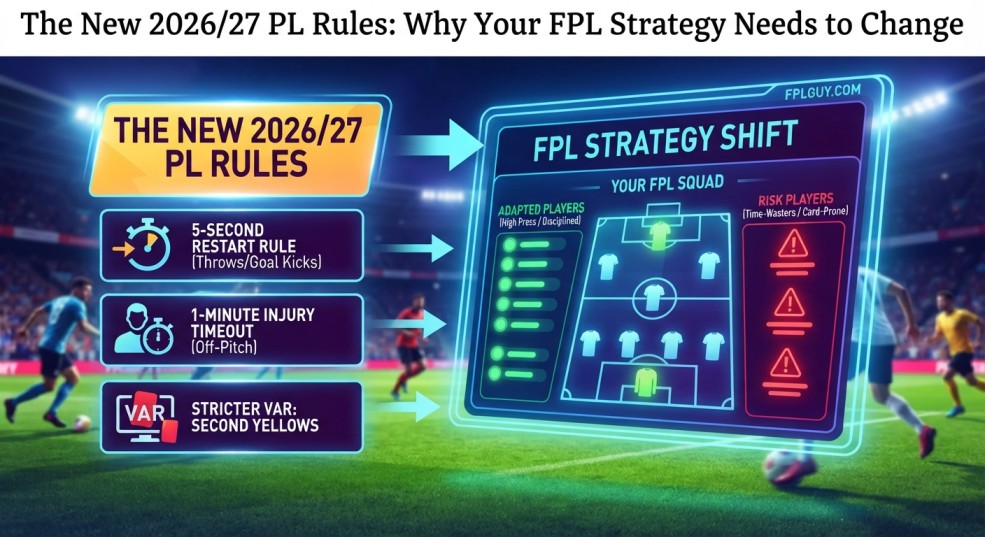
The 2026/27 Premier League season is officially underway, and while we spent all summer obsessing over player prices, fixtures, and £100.0m squad templates, a massive shift has flown slightly under the radar: the new Laws of the Game and officiating points of emphasis.
Referees have tightened the leash on time-wasting, game management, and discipline. For Fantasy Premier League (FPL) managers, these aren’t just real-world football updates—they directly influence match tempo, bonus points, clean sheets, and card accumulation.
Here is how the 2026/27 rule changes impact your FPL strategy and what you need to adjust right now.
1. The 5-Second Restart Rule & Multiball Protocol
The Rule: A strict 5-second countdown and restart reversal will be applied for clearly delaying throw-ins and goal-kicks. Furthermore, the new multiball protocol means players can no longer use towels to dry balls for long throws, and ball assistants cannot hand replacement balls directly to outfield players.
The FPL Impact: Expect fewer slow, deliberate build-ups from goal-kicks and more chaotic, high-tempo transitions.
The Strategy: High-pressing teams and fast, direct wingers benefit immensely from frantic restarts. If you own attackers from teams that thrive on quick counter-attacks, you could see an increase in transitional goal-scoring opportunities.
2. The 1-Minute Injury & Sub Timing
The Rule: Players receiving on-field injury treatment now must remain off the pitch for at least one minute (up from 30 seconds). Additionally, substituted players have a strict 10-second limit to leave the field, or their replacement must wait until the next stoppage after a full minute has elapsed.
The FPL Impact: Teams will spend more time playing with 10 men while a treated teammate waits out the timer. This creates late-game fatigue windows and amplifies the value of deep squads.
The Strategy: Pay attention to teams with strong benches. Heavy rotation risks might increase, but late-game substitutions could cause defensive structures to collapse in the final 15 minutes, boosting attacking returns for bench-heavy or elite squads.
3. Stricter VAR for Second Yellows & Referee Points of Emphasis
The Rule: VAR can now review second yellow cards that result in a red card to prevent clear injustices. At the same time, referees are cracking down heavily on holding offences, deliberate time-wasting, and simulation.
The FPL Impact: Reckless defenders or players with a reputation for tactical fouls are now massive transfer traps. A single mistimed grab in the box or a second bookable offense can completely tank a defender’s season points.
The Strategy: Prioritize disciplined, clean defenders. Avoid players prone to disciplinary trouble, as suspensions will disrupt your long-term transfer planning.
Summary: Actionable Takeaways for Your Squad
| FPL Position | How to Adapt to the New Rules |
| Goalkeepers & Defs | Stay away from chaotic, card-happy defenders. Look for composure and clean-sheet metrics in well-drilled, disciplined blocks. |
| Midfielders | Target transition-heavy players and dynamic pressers who capitalize on faster restarts and chaotic turnovers. |
| Forwards | Late-game fatigue is real. Premium assets facing teams forced to play with 10 men during injury treatment windows could exploit tired defenses. |
Are these new rule changes forcing you to rethink your squad? Head over to our FPL Transfer Planner to map out your upcoming moves and keep your team ahead of the competition!